5.30 p.m.
As the wagon begins to move on the rails, my gaze falls on the clouds outside the window. A moment after the train whistles, the landscape becomes blurred, and the white tufts in the sky turn into colourful whirlwinds, leaving room for my mind to wander.
It has been an exhausting day, full of emotions, and only now that I have a seat can I ponder everything I’ve been through.
I take my pen and paper out of my little bag to follow the flow of my thoughts.
9.00 a.m.
I make it to the lab out of breath, my heart still pounding after a desperate run in an attempt not to be late. Luckily, smiling faces welcome my arrival and reassure me. The lab meeting is about to start: I grab my notebook, ready to jot down every little detail.
However, as soon as the researchers begin presenting the relevant findings gathered over the past few weeks, it doesn’t take long for me to realise how my notes are of little use. I struggle to make sense of the mysterious acronyms and colourful charts I’m seeing, a little bit in vain. Once I get back home, I will have to decipher the scientific hieroglyphs I’ve scribbled down.
But I don’t get discouraged: I keep observing and listening, eager to learn, and I manage to comprehend a few things. My attention peaks when hearing some familiar terms: GLP-1 receptors, cholesterol intermediates, Western blot…
In all of this, I can’t help but be amazed at how the Professor follows each member of her team with remarkable attention: she manages to jump from one topic to another, to highlight data that seem wrong in a table, to enquire about specific steps of some experiments. While I’m still trying to figure out what a graph represents, she has already spotted what to improve for the progress of the project.
And I don’t even notice that an hour has passed: it’s time to get down to work.
10.10 a.m.
I wear my gown and gloves: safety comes first in the lab. But not just for us – cells and bacteria, in their respective refrigerators, proliferate and wait to be used for future analyses. We wouldn’t want to contaminate them, would we?
With a coat that is clearly too wide for me, I tag along with the PhD students like a chick following its own mother hen. And with eyes as full of wonder as those of a child at first discoveries, I silently look at them handling pipettes and vials.
“If you have any questions, don’t hesitate to ask us.”
Had they never said that! Every passage raises a question; every reagent becomes an opportunity for dialogue. I’m carrying out my own little investigation within a real research project: I’m discovering what it means to do a researcher’s work!
11.15 a.m.
I believed I had prepared myself enough to be on the ball. Instead, it turns out I am far more ignorant than I thought.
One of the experiments involves amplifying a specific stretch of DNA from bacteria, to determine whether they have the gene introduced using plasmids. With the holy vials containing DNA, we make our way through different machines until we reach a long grey cube: a thermocycler. The researcher turns it on, lays the Eppendorf tubes inside and modifies the settings on a screen. A timer appears on the display: 1.43 h.
“And now?”
“And now we wait.”
11.30 a.m.
Needless to say, I can’t just wait. There is no way I’m going to stare at some numbers for more than an hour. Thus, I stroll about the lab driven by curiosity, trying to find another researcher to peek at.
There is a tall girl who is dealing with a computer, showing multiple plots with red and blue steep curves.
“What are you doing?”
“I’m extracting RNA from some cells I cultured, and, thanks to this machine, I am able to see its quantification in real time.”
“Oh, I see. And what is she doing?” I timidly ask, pointing at her colleague on the opposite side of the room.
“She’s streaking some bacteria. But be careful: she needs no one to talk around her, so the environment stays sterile.”
I immediately shut up and nod silently in agreement. I don’t want to compromise the hard work of days.
1.30 p.m.
“Well, how did your PCR go?”
The conversation at lunch starts casually. It seems that we are talking about this and that. But to anyone listening closely, the scene could appear pretty odd: the chat revolves around modified genes, metabolic pathways, mice tissue and so on… all while eating rice salads, sandwiches or baked pasta. Am I attending a scientific symposium?
Sort of. But they are humans too. At a certain point, the talk shifts to the last cinema discounts, new dance courses and the unforgettable ghost secretary of the Uni.
“So, coffee downstairs?”
After all, they also have a life outside the walls of the laboratory.
3.00 p.m.
With my brain full of new notions, I can’t help staring at the workbenches. It is mind-blowing to think that the latest medical discoveries are happening right there.
Someone catches sight of my longing look and soon addresses me.
“Hey, do you want to do something?”
Of course I do! Tell me whatever you want; I would give anything to be of any help in this lab.
And so, I can finally have an active role.
First, they assign me a rack full of Eppendorfs to label. Then, I hand over the necessary glassware to those who need it: beaker, graduated cylinder, burettes… Lastly, I fully assist in the preparation of a gel, carefully measuring the agarose powder on an analytical balance.
I’m quickly at ease: I was worried about making a disaster, but everybody comforts and motivates me. They aren’t perfect either, they say. Even though this is their job, mistakes or setbacks are always around the corner.
After checking my work, they let me practise pipetting different volumes of water into some vials. I feel like sparkling water – I’m taking my very first steps in a lab.
4.30 p.m.
“Could I have a minute of your time? I don’t want to bother you.”
After the wet lab, I want to dedicate more attention to the two guys who have been sitting in front of a computer for hours. They are so quiet, but it’s clear that they are working hard too.
“We’re analysing millions of data points from biobanks. Our aim is to identify clusters linked to the genetic traits the others are studying under the fume hoods.”
“Exactly. And not only that. We also help them organise their experimental data and create graphs from it. Well, they have fun! We’re here, desk-bound.”
“But we like what we do. Although it’s difficult and we sometimes get fed up when the systems slow down or crash, we push through.”
They have caught my interest. I take a seat next to them, well-disposed to pay attention to the list of sequences they are showing me.
5.00 p.m.
Time has flown by and it’s time to greet and thank everybody.
“We hope to see you again soon.”
How I wish I could stay here longer!
6.00 p.m.
The train is slowing down, getting close to the station. I put down my pen and paper and head towards the exit door. But the thoughts keep running in my head.
The enthusiasm and feelings that preceded this morning come back to life in an instant. Even though it was short, this one-day experience has truly changed my view of research.
During this summer, I delved into scientific literature with an eagerness to discover the world which almost bordered on the pathological. While going through countless articles, I wondered what lay behind that research: how could all those data be collected, those experiments carried out and then reported in those papers?
We are used to thinking of researchers as chemists mixing unknown reagents or physicists lucubrating on impossible ideas. But the reality is far from that.
Today, I had the chance to understand how much effort goes into the seemingly flawless and perfect research papers we can read on websites like Scopus and PubMed. Indeed, doing research is neither an easy task nor something to be taken for granted. The whole process which leads to gaining new, sharable knowledge takes a long time and a lot of patience.
I learned how dry and wet labs are differently yet co-ordinately conducted, working together to provide the greatest precision and accuracy in experimental findings.
I had the opportunity to take a glimpse at the dedication, passion and commitment that keep researchers going through the ups and downs of everyday life in a laboratory. Unexpected results and human errors are inevitable and normal. Yet they don’t give up and persevere in their job with admirable care and attention.
Above all, I realised that the notable advancements in medicine are possible thanks to a variety of people in our society: not only researchers and doctors, but also biologists, statisticians, engineers and many others who make incredible scientific discoveries possible.
And as a medical student, I am totally grateful for this.
Elisabetta Vittoria Caiazzo
Acknowledgements
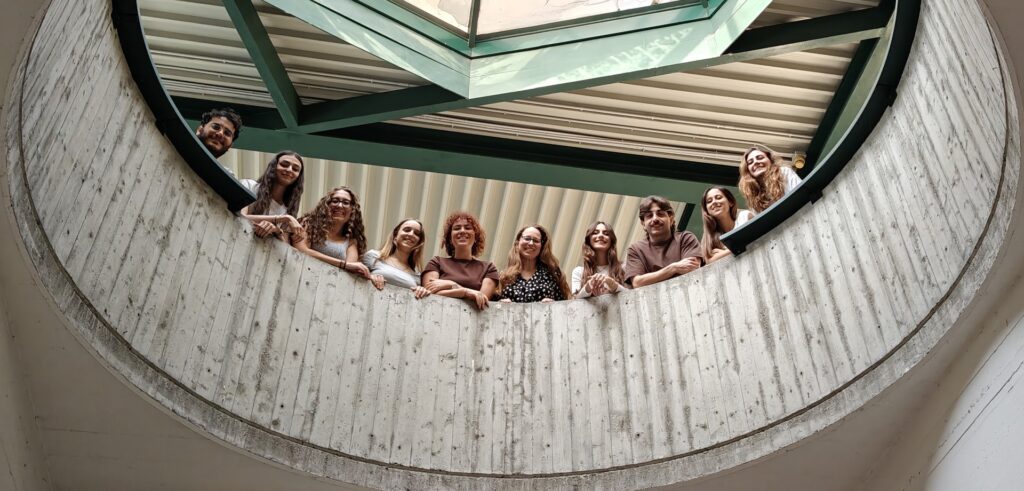
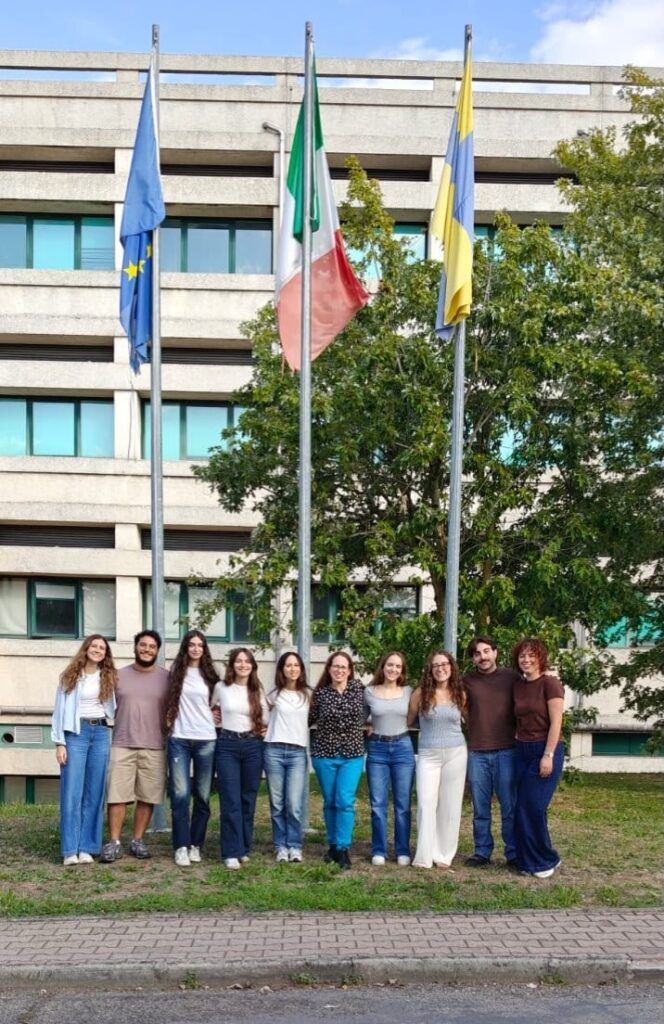
I would like to thank Professor Elisa Araldi for allowing me to visit her Systems Medicine Laboratory and her fantastic team for welcoming me in such a way that I could feel at home.
Special thanks to Benedetta Gelmetti, Giulia Mengato, Nicole Marcati, Laura Musumeci, Ottavia Cannatella, Giorgia Peca, María Ybarra Sanchez, Roberto Pili and Riccardo Perrone.